ReelWorld GO
An outdoor AR game where real-world context changes the water, fish, animals, tracks, cover, and the story behind every catch or hunt.

Most outdoor games treat location as a painted background. ReelWorld GO is being designed around the opposite idea: the place should determine the water, species, weather, animal behavior, cover, tracks, and player expectations before the cast, stalk, or shot ever begins.
That creates a game that can be approachable in one minute and expandable for years. A player should be able to open the game, fish a believable water context, read a bobber, feel a bite through the phone, track wildlife through signs, respect wind and cover, and progress through fair challenges. Under those loops is a larger platform for collections, local knowledge, tournaments, events, and outdoor AR play.
Real regions should produce different fishing stories.
A Michigan lake should not feel like a Florida canal. Texas reservoirs, Oklahoma ponds, Arkansas rivers, Australian coasts, and cold northern water should not share the same species list or environmental character. ReelWorld’s strongest differentiator is the promise that geography matters.
The system is intended to connect each playable region to a curated ecological profile: water type, likely species, habitat, seasonal context, catch difficulty, and presentation. That does not mean exposing exact private fishing spots or pretending that a simplified game database is a scientific survey. It means using defensible regional knowledge so the game stops placing the wrong fish in the wrong water.
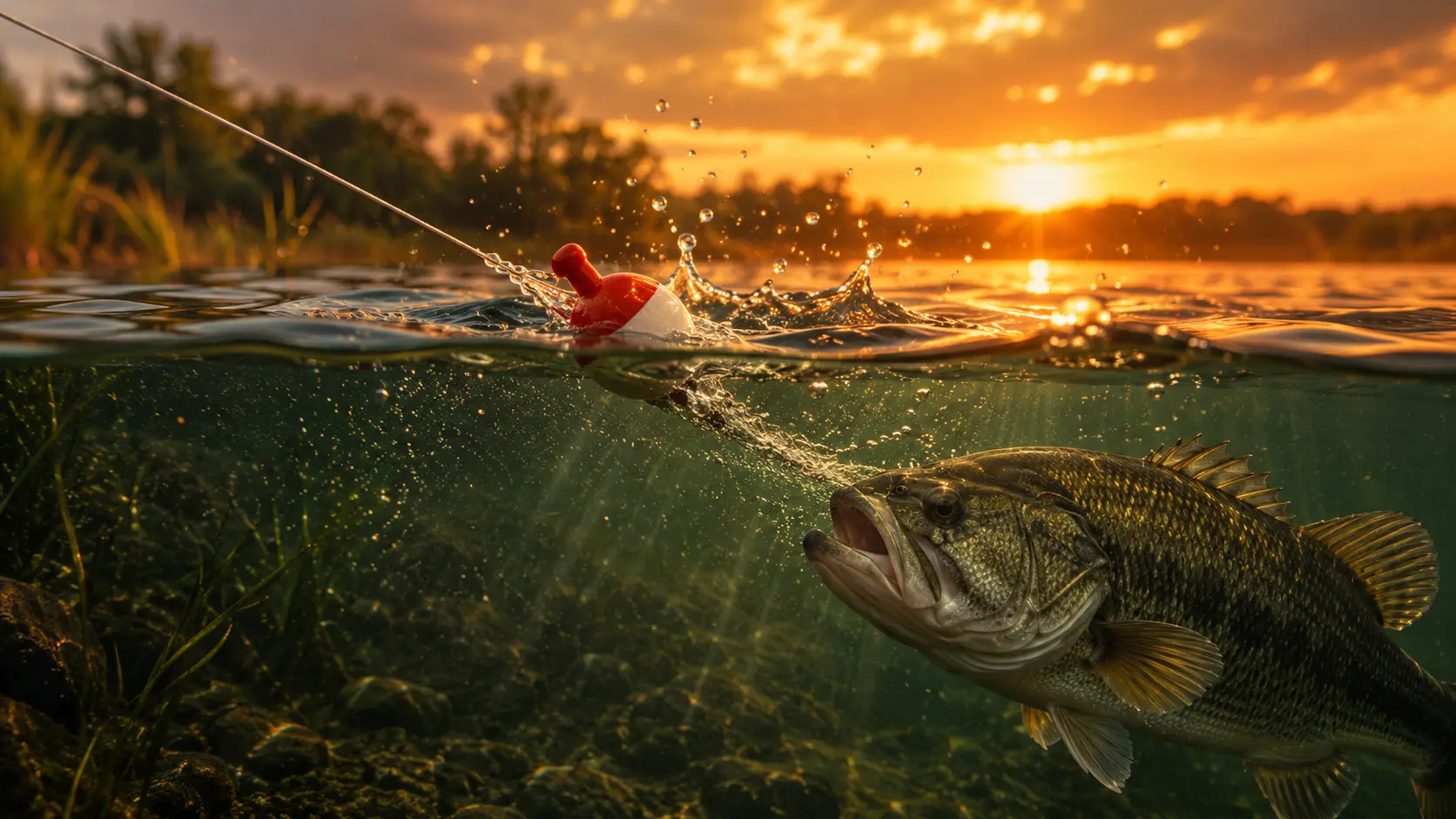
The bobber is the heartbeat of the game.
A fishing game succeeds or fails between the cast and the catch. The bobber cannot sit motionless like a menu icon. It needs to drift, settle, bob with the surface, react to line tension, twitch when a fish investigates, pull sideways when the fish commits, and dive with enough clarity that the player understands the moment to act.
On a phone, the visual reaction should work with haptics rather than compete with them. A subtle investigation tap, a stronger strike pulse, sustained tension feedback, and a clean landing confirmation can make a lightweight web game feel unusually physical. The goal is not constant vibration; it is meaningful feedback at the exact moments the player needs information.
Direction, power, target zone, lure choice, and a readable landing.
Surface motion, bobber behavior, line tension, sound, and haptic cues.
Fish behavior, drag, fatigue, line risk, timing, and player control.
Species, size, rarity, XP, collection progress, and a clean catch reveal.
The hunt should start before the animal appears.
ReelWorld Hunting should not be a target gallery. The satisfying loop is reading the world: tracks, scat, broken brush, sound, wind direction, scent, cover, feeding zones, watering areas, bedding zones, time of day, and animal alertness. The phone can make that loop feel personal through camera placement, compass direction, haptics, audio cues, and optional motion controls.
Animals need lightweight behavior brains: hunger, thirst, fear, fatigue, curiosity, hearing, smell, vision cones, memory of danger, group movement, wounded behavior, predator pressure, and terrain preference. A deer might freeze before bolting. A predator might stalk, circle, charge, or retreat. Small animals can use trees and cover. Bigger animals can use distance, noise, and surprise.
Footprints, trails, sound, habitat, wind, and recent sign.
Cover, movement speed, scent, line of sight, and patience.
Animal awareness, approach, flee, charge, hide, or climb behavior.
Shot placement, ethics rules, trail follow-up, XP, and collection records.
Location-aware does not mean location-gimmick.
The current expansion direction includes Michigan, Florida, Texas, Oklahoma, Arkansas, Australia, and additional regions that can support credible species and habitat profiles. Each area needs more than a dropdown label. It needs its own water character, fish tables, animal tables, difficulty balance, visual cues, progression opportunities, and reasons to return.
Augmented reality can strengthen that connection when used carefully. The phone camera could support a casting view, catch presentation, track inspection, animal encounter, trophy reveal, or local event layer. It should not be required for the basic loop, and it should never imply that the game can see or verify real fish or real animals in the environment. The best AR features add presence without making false claims.

A calm game still needs a reason to return.
Levels and XP should make skill visible without turning every cast into a grind. Early progression can unlock better rods, line, lures, regional permits, challenges, and cosmetic customization. Collections can reward players for learning habitats and species rather than simply catching the largest number. Daily and weekly objectives can encourage variety: land three species on one lure type, complete a clean catch without over-tensioning the line, or explore a new region.
Leaderboards work best when they are specific and fair. Largest fish, best regional streak, tournament score, species mastery, and clean-catch efficiency are more interesting than one global number. Monetization should support the game without selling guaranteed wins: optional cosmetics, region packs, event passes, convenience features, and clearly priced premium content are safer than pay-to-win equipment or artificial frustration.
From playable prototype to dependable outdoor platform.
ReelWorld GO has a playable browser build and an established design direction around water scanning, bobber behavior, haptics, progression, leaderboards, regional fish, hunting immersion, animal awareness, and mobile play. It should still be described as an active prototype until the complete fishing loop, hunting loop, regional validation, account persistence, competitive integrity, monetization, and device performance have been tested end to end.
- Playable browser build
- Fishing and casting foundation
- Mobile-first interaction direction
- Regional expansion plan
- Fishing + hunting platform direction
- Responsive cast-to-catch physics
- Habitat-valid fish and animal tables
- Tracking, scent, cover, and animal AI
- XP, levels, inventory, saves, and tournaments
- Clear, non-pay-to-win monetization
Fishing, hunting, and the outdoor platform beneath it.
Each guide owns a separate search intent and a separate design question. Together they document the cast-to-catch loop, hunting loop, regional system, equipment, competition, progression, and broader outdoor AR platform without publishing duplicate pages.
ReelWorld Hunting Should Feel Like the Animal Knows You Are There
A real hunting game is not a target gallery. ReelWorld Hunting needs tracks, wind, scent, cover, animal awareness, fear, fatigue, and encounters that change before the player ever sees the animal.
Read the guide →Pokemon GO Proved the Map. Cabela’s Proved the Fantasy. ReelWorld GO Has to Prove the Loop.
The viral pitch is easy: Pokemon GO energy with fishing and hunting realism. The hard part is building a loop where water, habitat, species, tracking, tackle, and progression all agree.
Read the guide →The Best Mobile Fishing Games in 2026—and the Features That Actually Matter
Compare mobile fishing games by cast feel, fish behavior, gear depth, progression, multiplayer, ads, and device fit—not by screenshots alone.
Read the guide →Realistic Mobile Fishing Games Need More Than Better Water Graphics
A realistic fishing game earns the label through readable physics, tackle consequences, fish behavior, sound, haptics, and honest failure—not reflections alone.
Read the guide →Bobber vs. Lure: Why a Fishing Game Should Never Treat Them the Same
Bobber fishing is built around waiting and reading; lure fishing is built around retrieval and presentation. A credible game needs two different loops.
Read the guide →If the Lure Disappears, the Fishing Game Loses Half the Story
Lure retrieval should be visible, readable, and tied to speed, pauses, depth, and fish response. Otherwise reeling becomes an empty progress bar.
Read the guide →Rods, Reels, Line, Hooks, Weights: Building a Fishing Game Loadout That Makes Sense
A fishing loadout should teach relationships between equipment, water, presentation, and target species—not bury players beneath disconnected rarity scores.
Read the guide →The Fish Is Hooked. Now the Game Has to Make Line Tension Matter.
Drag and line tension turn a bite into a fight. The player needs clear risk, fish behavior, recovery, and a reason for every broken line.
Read the guide →Mobile Fishing Tournaments Should Reward Skill—Not Whoever Spends the Most
Fair fishing tournaments need comparable conditions, transparent scoring, anti-cheat controls, divisions, and rewards that do not sell the win.
Read the guide →A Location-Based Fishing Game Should Know Florida Is Not Michigan
Regional species, habitat, water character, gear, and progression should agree. Location cannot be a menu label pasted over the same fish table.
Read the guide →How a Fishing Game Can Keep Players Hooked Without Becoming Pay-to-Win
Fishing-game progression should unlock new decisions, mastery, regions, and expression—not sell guaranteed catches or manufacture frustration.
Read the guide →One Outdoor AR Platform for Fishing and Hunting Sounds Wild—Here’s How It Could Work
ReelWorld GO can share regions, identity, collections, events, and technical foundations across fishing and hunting while keeping each activity mechanically honest.
Read the guide →