ReelWorld GO is moving toward a more believable fishing simulation, with focused work on fish AI, purposeful casting, snags, responsive water, reel feedback, mobile controls, and a faster first outing.
ReelWorld GO is moving from a quick tap-to-catch idea toward a fishing simulation where actions have consequences. The work connects the cast, bait, water, bite, reel, and fish response so a catch can feel earned instead of randomly awarded.
The current public browser game is playable now. This update covers the newest development work and the direction behind it; some systems are still being refined, so the live build is the source of truth for what is playable today.
The standard is simple: after something happens, the player should understand what caused it and what they can do next. That is the thread running through these ReelWorld GO updates.
A quicker first outing, with the deeper systems after the first catch
The first minute should get a new player fishing. The intended flow is direct: open the game, make a cast, see a fish react, and learn the basic loop while playing. Extra account or setup steps should not hide the first cast.
After that first catch, the experience can introduce account setup, a fishing license, equipment, and progression in context. A small prompt can point out the next useful step without stopping the player with a wall of instructions. Character choices, including gender and appearance, should also stay easy to find.
- Get to the first cast quickly
- Teach controls through readable action and feedback
- Introduce account and license steps after the player has tried the loop
- Keep character and equipment choices understandable
Casting should be a decision, not a button animation
Casting is the start of the fishing story. Direction, power, rod, reel, and rig should change where the bait lands and what water the player can reach. Better reels and suitable rigs can open longer casts, while a cast into deeper water should still work when the bottom is outside the visible scene.
The reel itself needs to tell the truth. Recent control work focuses on the physical bail already shown on the reel: it should open in the right direction, move where the player expects, and give clear sound and visual feedback. A second floating digital bail would make the control harder to read, so the real reel part should carry the action.
- Visible cast direction and distance
- Rod, reel, bait, and rig choices that affect reach
- A believable option to cast beyond the visible shallows
- A physical reel bail with clear, consistent motion and feedback
Fish need behavior that responds to the player
The fish-AI work is aimed at replacing repetitive, robotic motion with behavior that feels connected to the cast. Fish should be able to notice bait, approach or ignore it, bite at different moments, and respond when the line tightens. Their movement during the fight should make the player adjust instead of simply waiting through a canned animation.
The goal is not to call a fish ‘smart’ because it moves. The useful test is whether two casts can lead to different readable outcomes: a fish investigates and turns away, a bite pulls the line, a fight changes direction, or the fish escapes after the player mishandles tension.
- Fish behavior tied to bait, cast, and line state
- More varied approaches, bites, turns, jumps, and escapes
- A fight that gives the player something meaningful to manage
- Fewer repeated motion loops that make fish feel robotic
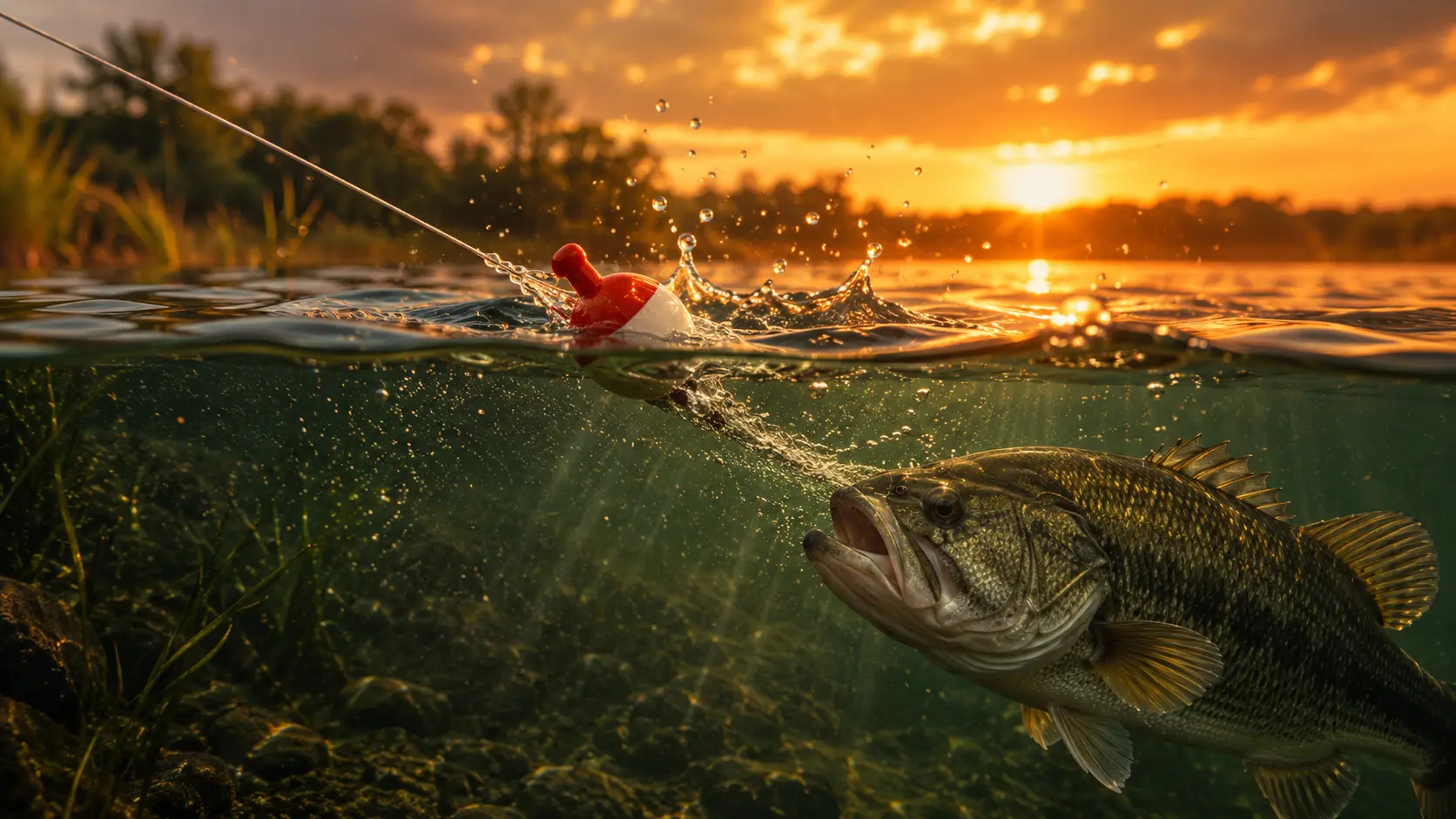
A snag should explain what went wrong
Getting snagged adds useful friction when the player can read it. The line should react clearly, and the game should distinguish a snag from a bite or an ordinary pause. If the current scene can identify the cause, it should explain it; if not, it should still show the player that the rig is caught and what recovery choices are available.
That feedback turns a frustrating interruption into a fishing decision. It also gives the player a reason to think about cast placement, rig choice, and line tension before sending the next cast.
- Make a snag visually and audibly distinct from a bite
- Show line tension or other useful evidence
- Offer a clear recovery or loss outcome
- Connect the result to placement, tackle, or player action where possible
The water has to keep moving—even when it is calm
Still-looking wave textures make a lake feel like a picture. Water updates focus on motion that matches the scene: small ripples where the line or bobber touches, surface movement that never freezes, and a flat-calm option when the conditions call for it. Sun reflections should travel across the water instead of sitting in one fixed strip.
The view should also leave room for uncertainty. Players should be able to cast toward deeper water even when they cannot see the bottom. Water animation, distance, and fish visibility need to work together so the player can read a cast without seeing every answer at once.
- Moving waves when the scene has waves
- A genuinely calm surface when the conditions are calm
- Ripples that respond to water contact
- Sunlight reflections that move across the surface
- Deep-water casts that do not depend on a visible bottom

AR and standard mobile play need reliable controls
ReelWorld GO is being shaped for both AR and non-AR sessions. In AR, the scene should remain stable in the real world while the rod and player interaction respond to the phone. Reeling should not make the whole view jump around. In standard play, image-based environments, motion controls, and water animation should still make the game feel active without requiring AR.
A visible volume control and clear audio cues matter because players may be outside, in a noisy place, or playing with sound off. Sound can help, but the screen still needs to explain the action on its own.
- Stable camera behavior while reeling
- Rod and phone movement that feel connected
- A non-AR path with readable controls and lively environments
- On-screen volume control and visual equivalents for sound cues
Hunting is a separate mode with its own rules
The broader ReelWorld direction also includes hunting activities. Duck hunting, skeet shooting, and wildlife encounters should not reuse the fishing interaction. For duck hunting, the aim is point-to-aim and shoot: the player should line up the shot, then fire, rather than tap directly on an animal sprite.
Animals need to be visible and respond believably to the player. Fishing, hunting, and skeet can share the wider platform, but each mode needs its own controls, feedback, safety cues, and clear explanation of what is playable in the current build.
- Separate fishing, hunting, and skeet controls
- Aim first, then shoot
- Animal sprites and reactions that are easy to read
- Clear mode and safety information without blocking the first fishing session
The quality check is whether players can explain the outcome
A feature list does not prove that a fishing simulation feels better. The useful check is to play a short session and ask whether people can explain why the cast landed there, why the fish bit or ignored the bait, what caused a snag, and what changed during the fight.
That test should cover AR and standard play, sound on and off, calm and moving water, shallow and deep casts, and more than one fish response. If a player cannot tell what happened, the next update should improve the cue before adding another menu or upgrade.
- Test several casts, bites, and fish responses in one session
- Include a snag and a recovery attempt
- Check water motion and the reel bail on a phone
- Verify that sound-off play still communicates every critical state
- Use the live build to separate available features from work in progress
Frequently asked questions
What are the latest ReelWorld GO updates about?
The current update direction centers on fish AI, casting choices, readable snags, moving water, physical reel feedback, improved first-session flow, mobile and AR controls, and separate hunting activities.
Are all of these features already in the live game?
No. ReelWorld GO is playable as a public browser game, while some systems described here are still being refined or developed. Check the live build to see what is available now.
What does ‘fish AI’ mean in ReelWorld GO?
It means fish behavior should respond to bait, line state, and player actions with more varied and readable outcomes instead of repeating the same motion.
Can I play ReelWorld GO now?
Yes. Open the current browser build at reelworld.illcoai.tech/play. Feature availability can change as the game is updated.
Is ReelWorld GO still a game if it is becoming a simulation?
Yes. It is a game designed around a more simulation-like fishing loop, with outcomes shaped by the cast, tackle, water, fish behavior, and player decisions.
About this guide
This article was developed from iLLCo AI’s hands-on work building creator tools, multi-agent workflows, media systems, and business automations. AI assisted the production process; Aaron Allton reviewed, directed, and takes responsibility for the published guidance.