Test the customer problem, define a small offer and record evidence before committing to a build or an acquisition. Treat a project plan as a proposal until real owners accept it.
A long feature list cannot prove that someone needs a product. Start by identifying a specific person, a recurring problem and a small offer you can test without building the entire business.
Separate facts you observed from assumptions you still need to test. A planning tool can organize the work, but it cannot create customer demand or bind a teammate to a task.
Describe the buyer and the problem
Write one sentence about the person, the situation and the cost of the problem in their own terms. Ask a small number of relevant people how they handle it today; avoid presenting a solution first and treating polite interest as a purchase.
Record the evidence, its source and the next unknown. Venture Lift is listed as a prototype; Project Kickoff Builder is a public beta for creating a structured plan. Check current access and review their output.
Define a small test with a stop condition
Specify the offer, intended audience, channel, budget and what observable result would justify another step. Examples include a qualified inquiry, a completed interview or a paid order where a real offer and fulfillment path exist.
A proposed target is a decision rule, not a forecast. If people do not respond, review the problem, audience and offer before increasing spend. Human approval should govern money, legal commitments and major decisions.
Consider build versus acquisition
Building gives control over scope but requires implementation and ongoing operation. Buying an existing app may save some work only if the buyer can verify the source, rights, dependencies and condition.
The Random Match App is listed as an acquisition opportunity with price by inquiry. Request the included assets, transfer terms, hosting and backend scope, intellectual-property rights, liabilities and transition support before making an offer.
Turn the plan into accountable work
Name each proposed task, its evidence, a suggested owner and a decision deadline. A kickoff document does not mean an owner has accepted the task or that implementation has happened. Confirm ownership and access directly before marking anything committed.
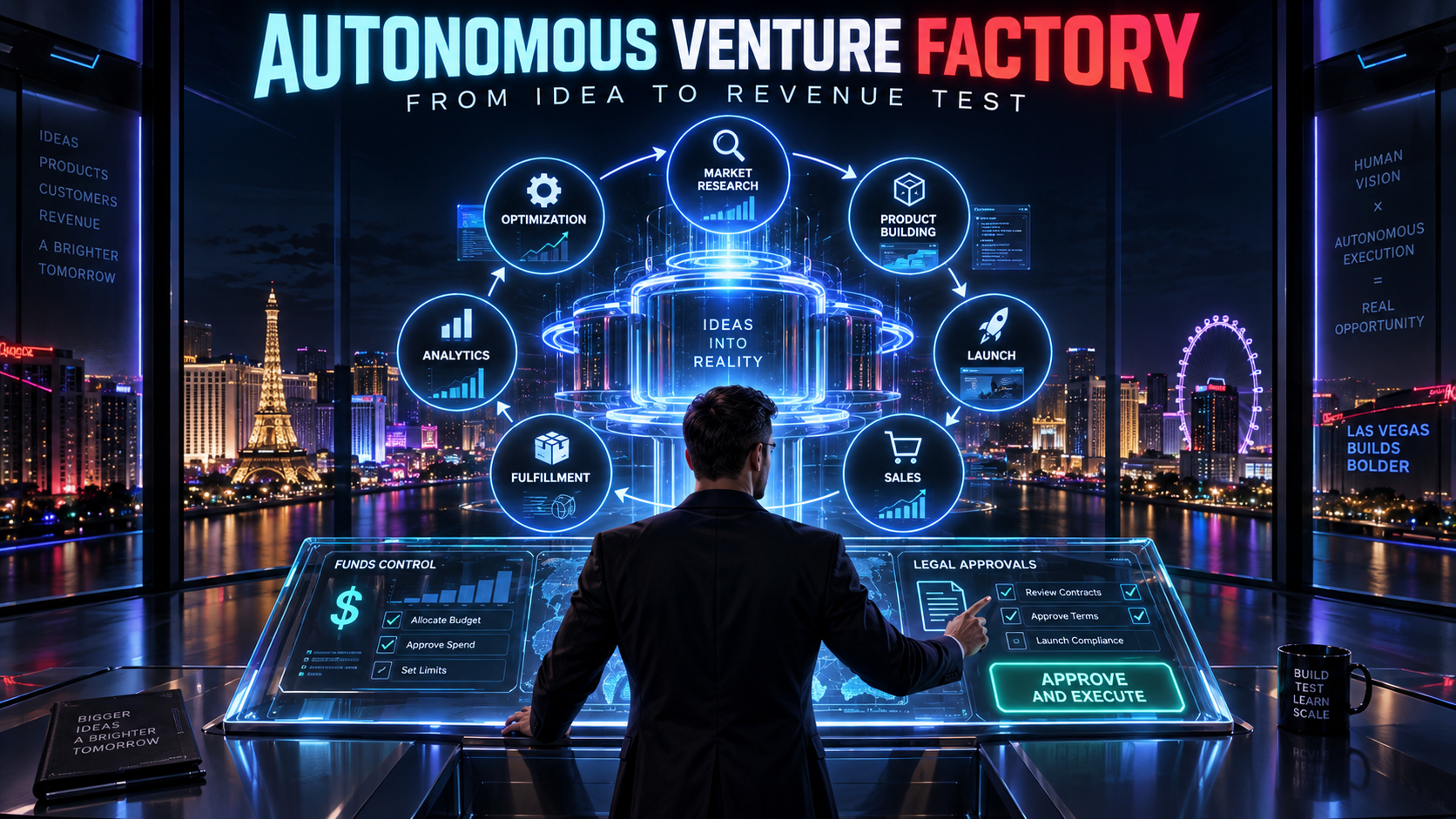
Autonomous Venture Factory is described as a guided pilot with human controls and custom scope. Verify the written proposal, current capability and costs; no business outcome is guaranteed.
Frequently asked questions
How do I validate an app idea before building it?
Identify a specific customer and problem, gather direct evidence, define a small test and decide in advance what result would justify the next step.
Does an AI-generated project plan mean the work is complete?
No. It is a proposal until people accept responsibilities and the work is actually performed and verified.
What should I verify before buying an app?
Review the included source and assets, ownership and licenses, backend, accounts, costs, liabilities, transfer terms and technical condition.
Can an autonomous business system guarantee revenue?
No. A pilot can organize and test a venture, but customer demand, execution, costs and market conditions remain uncertain.
About this guide
Prepared with AI assistance using iLLCo AI's published product descriptions. Examples and proposed tests are illustrative, not claims of customer results. Check each linked product record for current status, scope and terms.