
A human-governed agent system can research, validate, build, launch, fulfill, and improve a small digital venture—but it must prove demand before it earns the right to scale. The strongest results come from a focused operating system, measurable quality standards, and human accountability—not shortcuts.
The useful version of an autonomous company is not a chatbot that produces a business plan. It is a closed operating loop that observes evidence, chooses a bounded action, executes it, measures the result, and changes course.
Current AI systems can automate large portions of a narrow digital business. They still should not receive uncontrolled authority over banking, debt, contracts, legal filings, sensitive data, or major spending.
The Autonomous Venture Factory turns that distinction into an operating design: specialist agents move the work forward while a human controls the consequential gates.
Start with demand, not generation
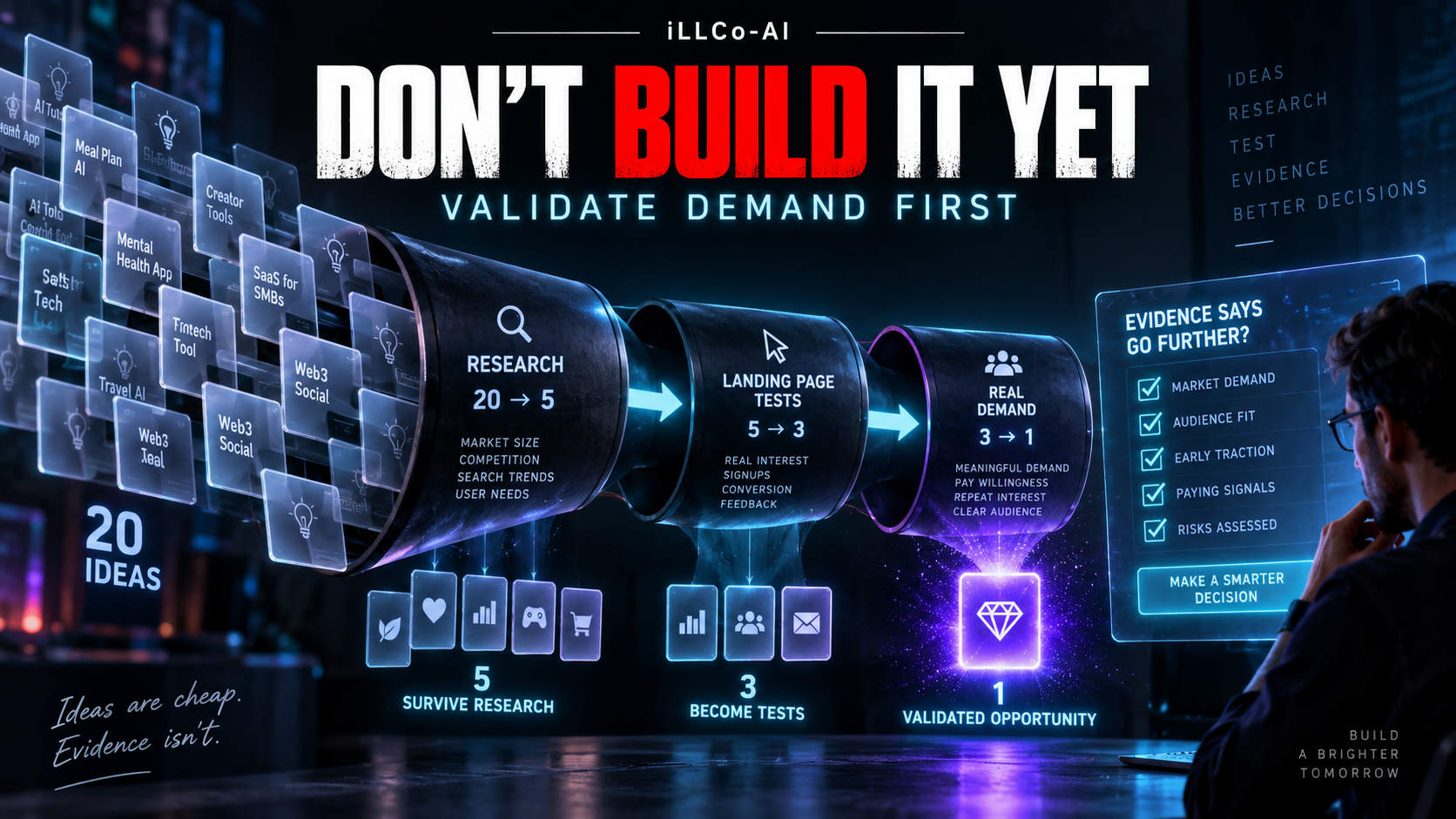
The easiest failure is building something impressive that nobody intends to buy. The first agent therefore acts as a demand validator, looking for painful problems, existing spending, identifiable buyers, reachable channels, viable pricing, and enough margin to deliver responsibly.
An opportunity advances only when the evidence supports a low-cost test. Uncertainty is recorded instead of being converted into confident marketing language.
- Existing buyer behavior or credible purchase signals
- A specific and reachable customer
- One painful job the offer can complete
- A practical distribution path
- A capped validation cost and a defined stop rule
Use specialists with one accountable hierarchy
A CEO agent coordinates product, growth, and operations agents. Product owns the offer and delivery; growth owns acquisition experiments; operations owns support, records, and reporting. A separate auditor challenges assumptions and flags unsupported claims.
This structure makes errors visible. It also prevents one model from inventing research, building the product, judging its own work, and declaring victory.
- CEO: objectives, priorities, and capital proposals
- Product: offer, build, experience, and fulfillment
- Growth: SEO, outreach, partnerships, and tests
- Operations: support, records, finance preparation, and reliability
- Auditor: evidence checks, security review, and stop recommendations
Keep consequential actions behind approval gates
Autonomy should expand only inside a written operating policy. The system can draft a contract or spending proposal, but a person approves it. The same boundary applies to large refunds, debt, hiring, ownership changes, legal filings, and destructive data actions.
Each gate needs an owner, threshold, evidence packet, and audit record. A vague instruction to be careful is not a control.
- Maximum experiment budget
- Permitted accounts and actions
- Required review for public claims
- Escalation path for customer harm
- Immediate stop and rollback procedure

Run the 30-day revenue test
The first milestone is not a giant platform. It is a legitimate test: identify one opportunity, publish one clear offer, establish an approved checkout path, reach qualified buyers, deliver real value, and compare revenue with operating cost.
Success means real customers received the promised outcome and the unit economics support another test. Failure is equally useful when the system stops cheaply and explains what evidence changed the decision.
- Success: verified demand, completed fulfillment, and positive contribution after direct costs
- Revise: interest exists but the offer, price, or channel misses the target
- Stop: no credible signal within the agreed sample or budget
- Escalate: legal, safety, privacy, or platform-policy risk appears
Scale evidence, not activity
More agents, products, content, and outreach can increase noise faster than revenue. The factory should allocate resources toward the venture with the strongest verified return and pause work that lacks a measurable next question.
The result is closer to an experimental holding company than a magical money machine: multiple small tests, transparent losses, controlled risk, and deliberate reinvestment into the winner.
Frequently asked questions
Is this true AGI?
No. It is an orchestrated business system built with current models, agents, integrations, software, and explicit human controls.
Can it start with no money?
Research and organic validation can begin with very little, but domains, hosting, APIs, payment processing, compliance, and acquisition may create costs. The safer objective is to win a first customer before meaningful investment.
How autonomous can it become?
Routine digital operations may become highly automated after testing, but financial, legal, security, privacy, and major strategic actions should retain human accountability.
About this guide
This article was developed from iLLCo AI’s hands-on work building creator tools, multi-agent workflows, media systems, and business automations. AI assisted the production process; Aaron Allton reviewed, directed, and takes responsibility for the published guidance.