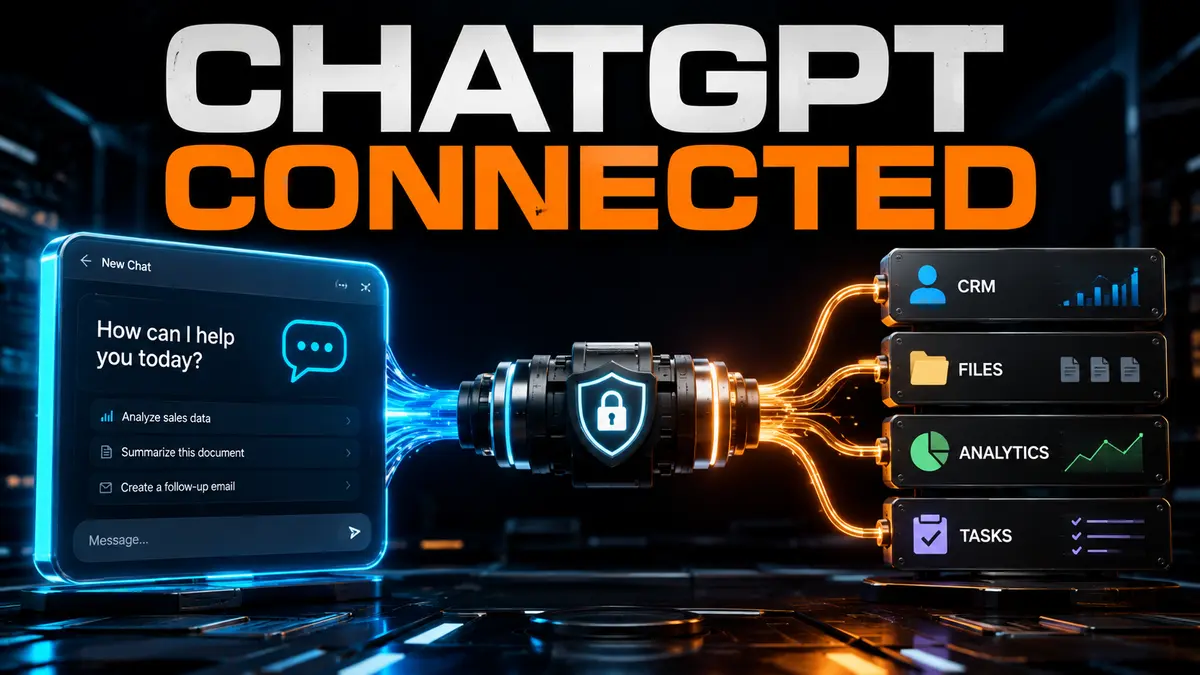
MCP is not inherently unsafe. The danger appears when a model-facing tool receives broad credentials, ambiguous consent, weak token validation, or write access without confirmation, least privilege, logs, and revocation. The strongest results come from a focused operating system, measurable quality standards, and human accountability—not shortcuts.
The Model Context Protocol makes it easier for AI applications to discover tools and retrieve context. That convenience also concentrates risk: a natural-language request can reach data, credentials, and actions that used to sit behind separate interfaces.
The official MCP security guidance documents authorization risks and attack paths; the July 2026 specification strengthens authorization expectations around OAuth 2.1 and issuer validation. The practical lesson is not to avoid MCP. It is to treat every tool call as untrusted application input.
A server that only searches approved public documents has a different risk profile from one that sends email, changes customer records, or spends money. Security must follow capability.
What happened: MCP moved from demos to authority
Early demos focused on tool discovery. Production systems must answer harder questions: which user is acting, which agent represents them, what resource is in scope, how long authority lasts, and what proof remains after an action.
The MCP roadmap itself notes that authorization has often assumed a person is present at consent time, while cloud agents and sub-agents need narrower, delegable identities. Long-lived API keys are not a substitute for that model.
- User and agent identity
- Resource-specific authorization
- Short-lived credentials
- Narrow delegated scopes
- Revocation and audit evidence
Why it matters: prompt injection can become an action
Text returned by a document, webpage, CRM field, or tool is data, not trusted instruction. If an agent treats embedded instructions as authority, a malicious source can try to redirect the workflow or request another tool.
The application must validate arguments, permissions, current state, and the user’s actual intent after the model proposes an action. A tool description is not an access-control system.
- Separate data from instructions
- Validate every tool argument
- Bind tokens to the intended resource
- Reject unexpected redirects and token forwarding
- Require confirmation for consequential writes
Who wins and who loses
Teams with narrow tools, standard authorization, visible confirmation, idempotency, and useful logs win because they can expand capability without hiding risk. Teams that paste one master API key into a remote server lose the moment a prompt, dependency, or operator behaves unexpectedly.
The safest architecture separates read tools from write tools and gives each the minimum data and action scope required.
- Read-only by default
- Separate write capability
- Per-user and per-tenant isolation
- Rate and spending limits
- Emergency disable and token revocation
The seven-case MCP security test
Before production, test normal access, wrong-user access, expired authorization, malicious retrieved text, duplicate writes, user cancellation, and dependency failure. The system must fail closed without leaking tokens or silently broadening scope.
Success means every denied case is blocked and logged, duplicate actions are harmless, and a user can revoke access. Any cross-user data exposure or unconfirmed consequential write is an immediate failure.
- Normal authorized request
- Cross-user access attempt
- Expired or revoked token
- Prompt-injected resource
- Repeated identical write
- Cancelled confirmation
- Unavailable downstream service
The iLLCo take: capability is the security boundary
Do not market an MCP server as safe because it uses a standard protocol. Publish the tool list, data classes, authorization flow, confirmation rules, retention, logs, and shutdown path.
A narrow connector that refuses work is more valuable than a universal agent with invisible authority.
Frequently asked questions
Are MCP servers insecure?
Not inherently. Risk depends on implementation, credentials, tool capability, authorization, input validation, confirmation, isolation, monitoring, and revocation.
Does OAuth make an MCP server safe?
OAuth is an important authorization layer, but it does not replace least privilege, argument validation, prompt-injection defenses, confirmation for consequential actions, audit logs, or secure downstream integrations.
What is the first MCP security improvement to make?
Inventory every tool and credential, then remove or separate unnecessary write access. Apply the narrowest resource and user scope possible.
About this guide
This article was developed from iLLCo AI’s hands-on work building creator tools, multi-agent workflows, media systems, and business automations. AI assisted the production process; Aaron Allton reviewed, directed, and takes responsibility for the published guidance.