Before buying ChatGPT Search Connector, compare scope, ownership, failure handling, provider costs, and the acceptance test—not the word AI. The strongest results come from a focused operating system, measurable quality standards, and human accountability—not shortcuts.
Buying AI is difficult because two proposals can use the same product words while delivering completely different levels of ownership, testing, and support.
ChatGPT Search Connector starts at From $750 and is intended to let ChatGPT search and retrieve governed company information with sources. The price only makes sense when the included boundary is written down.
A connector that ignores source permissions can turn a helpful search experience into a private-data leak. That is why this buyer guide grades the operating system around the model—not the demo answer that looked impressive once.
Buy the outcome, not the model name
The target buyer is eligible workspaces with approved internal knowledge. The required outcome is to let ChatGPT search and retrieve governed company information with sources. If a proposal cannot state the trigger, source, action, owner, and stop condition, it is not ready to price.
The answer may already exist in a policy, CRM note, knowledge base, or private document, but ChatGPT cannot use what it cannot securely retrieve.
- Exact trigger and input
- Approved data source
- Allowed output or action
- Human owner
- Failure and shutdown path
What the starting price should include
ChatGPT Search Connector is listed from From $750. At minimum, the buyer should receive the defined package and a record of the test performed against it.
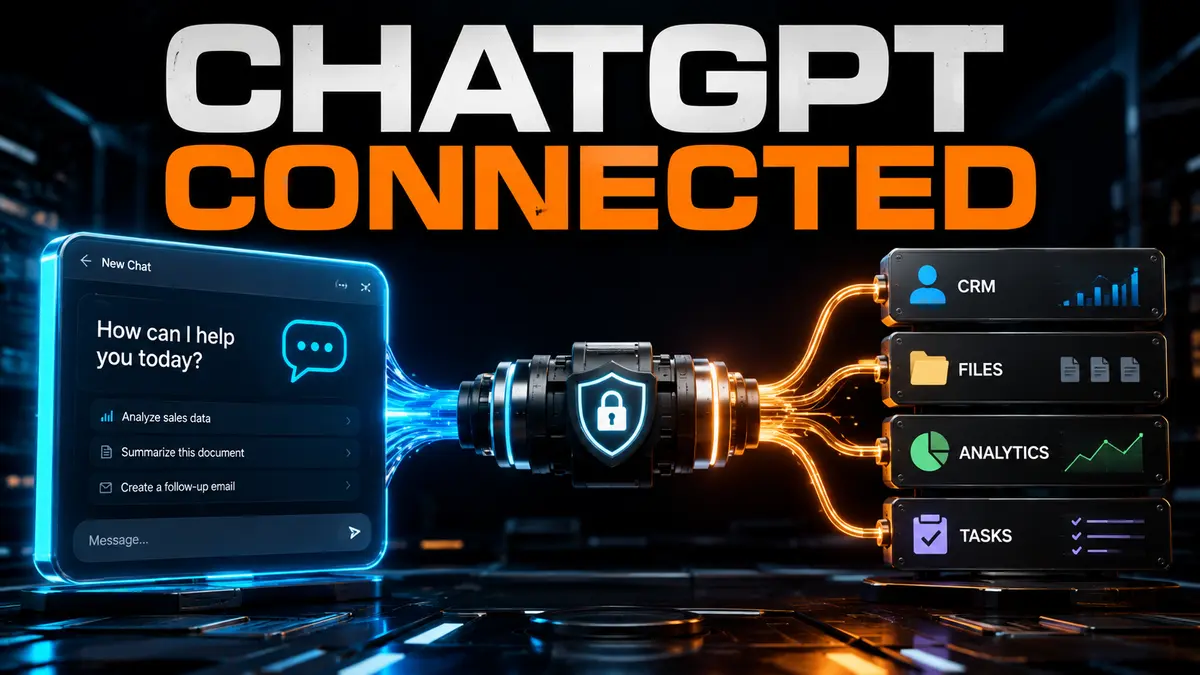
A remote MCP server exposes narrow search and fetch tools while the source system continues enforcing access and scope.
- Remote MCP server
- Search and fetch tools
- Source citations
- Deployment test record
Separate build cost from operating cost
The implementation price is not the total cost of ownership. Model tokens, provider plans, workspace eligibility, hosting, databases, authentication, external APIs, monitoring, and future changes can create recurring expenses.
Ask for a low, expected, and high usage estimate. Require the system to expose usage and errors instead of turning the monthly bill into a surprise.
Run the ugly cases before launch
Verify permission boundaries, citation fidelity, empty results, stale records, conflicting sources, and the removal of access.
The goal is not to prove that the happy path works. It is to learn whether the workflow fails visibly, preserves permissions, avoids duplicates, and gives a person enough information to recover.
- Incomplete request
- Conflicting source records
- Expired credentials
- Repeated submission
- Provider timeout
- Rejected human approval
Know the limitation before signing
A connector that ignores source permissions can turn a helpful search experience into a private-data leak.
No responsible provider should guarantee virality, search ranking, sales, directory approval, or perfect model behavior. The defensible promise is a scoped implementation, named evidence, clear limits, and an accountable handoff.
Frequently asked questions
How much does ChatGPT Search Connector cost?
The current starting price is From $750. Final price depends on systems, authentication, permissions, data quality, testing, hosting, and support.
Are API and platform fees included?
Not by default. Customer-owned model usage, workspace plans, hosting, databases, authentication, and third-party fees remain separate unless the written scope says otherwise.
What should I receive at handoff?
At minimum, require the scoped deliverables, deployment or package record, test results, limitations, operating notes, and ownership terms. For this offer, the listed deliverables include Remote MCP server, Search and fetch tools, Source citations, Deployment test record.
About this guide
This article was developed from iLLCo AI’s hands-on work building creator tools, multi-agent workflows, media systems, and business automations. AI assisted the production process; Aaron Allton reviewed, directed, and takes responsibility for the published guidance.