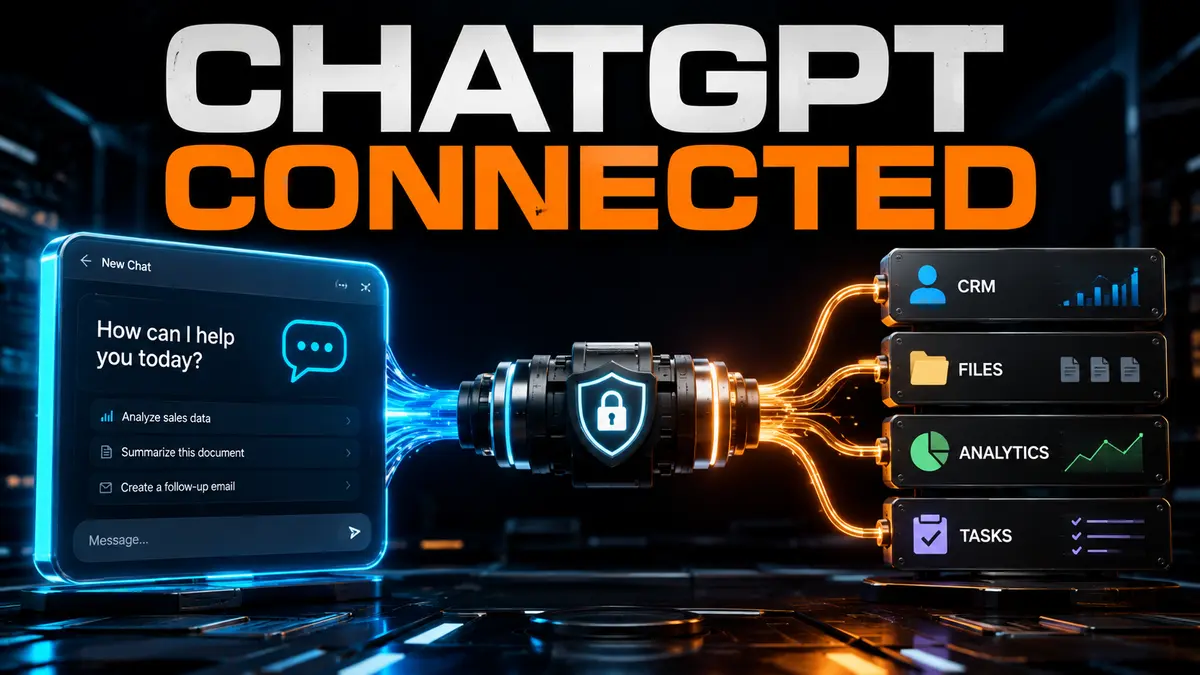
Another generic chatbot adds a text box. A useful app exposes the exact records, controls, confirmations, and results the task requires. Here is the practical system behind ChatGPT App + Interactive UI—including what it does, what can fail, and what proof to demand. The strongest results come from a focused operating system, measurable quality standards, and human accountability—not shortcuts.
The viral version of this story is easy: buy one AI product and the problem disappears. The useful version is more specific. Another generic chatbot adds a text box. A useful app exposes the exact records, controls, confirmations, and results the task requires.
ChatGPT App + Interactive UI is designed for companies that need a focused experience inside ChatGPT. Its job is to combine MCP-backed tools with an interactive component built around one user job.
That promise only matters when the workflow is observable. Test discovery, first-run setup, empty states, permissions, tool errors, confirmation, accessibility, and the final handoff result.
The uncomfortable reason the old workflow fails
Another generic chatbot adds a text box. A useful app exposes the exact records, controls, confirmations, and results the task requires.
Teams often compensate with a longer prompt, another dashboard, or more automation. None of those repairs the missing operating rule. The real question is who owns the next decision and what evidence the system may use.
- Name the trigger
- Require the evidence
- Assign the owner
- Expose the failure
- Define the stop condition
What ChatGPT App + Interactive UI changes
The app packages tool definitions, a remote MCP server, authentication, and an interactive UI that keeps the user oriented before and after an action.
The package is aimed at companies that need a focused experience inside ChatGPT. It is deliberately bounded: combine MCP-backed tools with an interactive component built around one user job. That makes the result easier to test, price, hand off, and improve.
- Apps SDK project
- MCP tool server
- Interactive UI
- Submission-ready package
The proof test buyers should demand
Test discovery, first-run setup, empty states, permissions, tool errors, confirmation, accessibility, and the final handoff result.
A polished demonstration is not enough. Ask for the inputs, expected output, excluded actions, negative cases, and the exact record that shows what happened.
- Normal case
- Missing or conflicting input
- Permission failure
- Duplicate request
- Provider failure
- Human correction
The risk nobody should hide
A submission-ready package does not guarantee OpenAI directory approval, workspace eligibility, or permanent platform behavior.
The safe buying decision is not the biggest package. It is the smallest package that can prove the outcome without creating a new hidden dependency.
Is it worth From $2,500?
The listed starting price is From $2,500. Compare that with the cost of the repeated failure, the time required to rescue it manually, and the value of owning a versioned workflow instead of another disposable chat.
Provider accounts, API usage, workspace plans, paid hosting, and third-party services remain separate unless a written scope includes them.
Frequently asked questions
What is ChatGPT App + Interactive UI?
It is an iLLCo AI offer designed to combine MCP-backed tools with an interactive component built around one user job. The exact included files or implementation scope are listed before purchase.
Who is ChatGPT App + Interactive UI for?
It is designed for companies that need a focused experience inside ChatGPT. A fit check should confirm the source systems, owner, permissions, and success criteria.
Does this guarantee traffic, sales, approval, or model accuracy?
No. It creates a more accountable workflow, but audience response, revenue, platform approval, provider behavior, and business outcomes cannot be guaranteed.
About this guide
This article was developed from iLLCo AI’s hands-on work building creator tools, multi-agent workflows, media systems, and business automations. AI assisted the production process; Aaron Allton reviewed, directed, and takes responsibility for the published guidance.